Foot Massagers for Neuropathy: Worth It or Wasted Money?
They're all over the ads: $150, $200, $300 machines promising to "restore" your nerves. Before you spend it, here's the straight answer — including one safety warning that matters far more than the price tag, and that almost no product page will tell you.
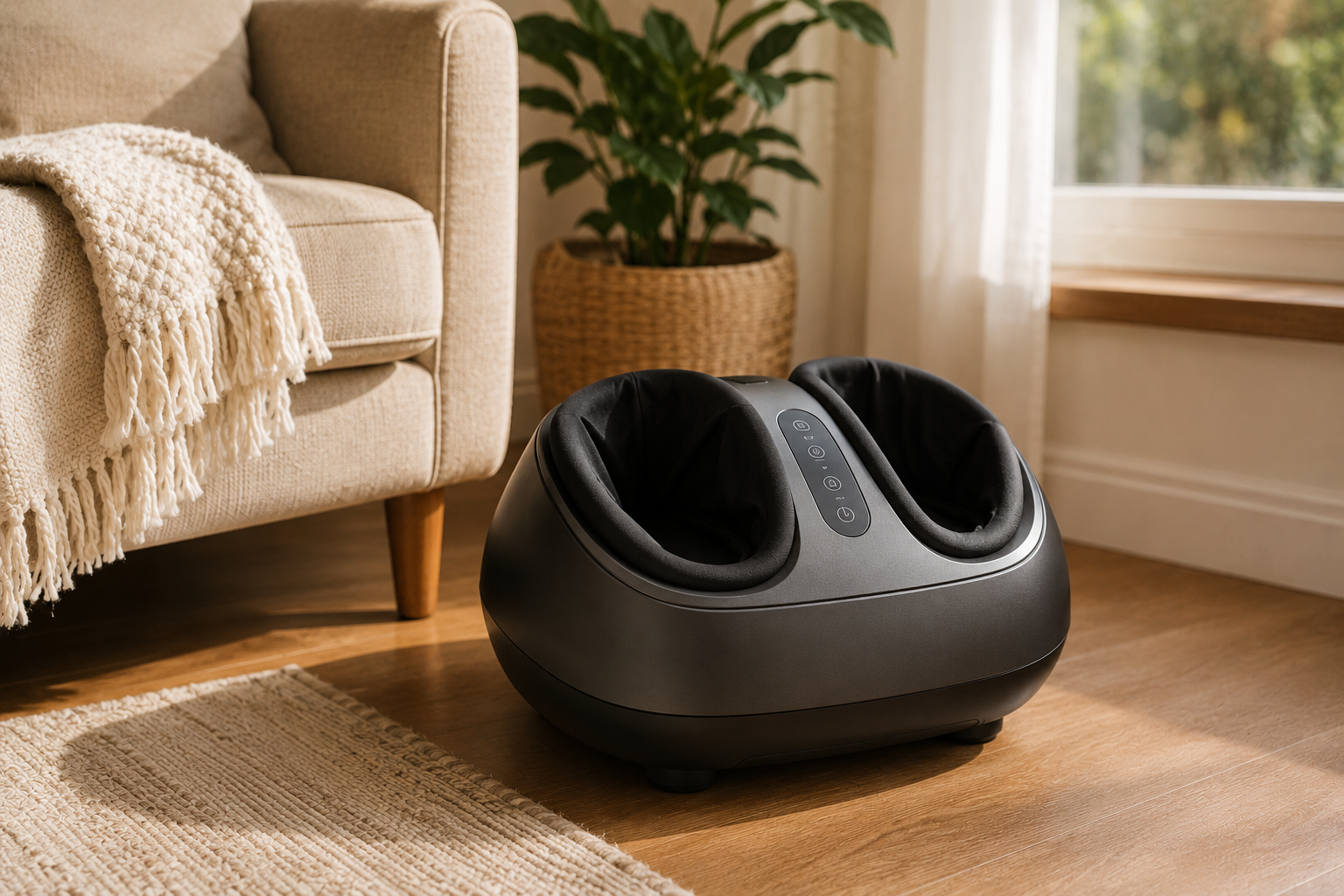
Foot massagers can feel good and may temporarily ease discomfort through relaxation and improved circulation — but the evidence that they improve nerve damage itself is thin. They're best understood as a comfort device, not a treatment. Important caution: if your feet are numb, you may not feel pressure or heat that's too intense, which risks bruising or burns.
Let me be the person who tells you the unglamorous truth: a foot massager is a nice thing to own. It is not medicine. And the marketing that blurs that line is separating a lot of people on fixed incomes from a lot of money.
What they can genuinely do
- Feel good. Don't dismiss this — comfort has real value when you're dealing with daily pain.
- Relax the muscles in tired, achy feet.
- Encourage local circulation temporarily.
- Help you unwind, which matters because tension and poor sleep amplify how loud pain feels.
If a massager helps you relax into sleep, that's a legitimate benefit. Just be clear about what you're buying.
What they can't do
Here's what the ads imply and the evidence doesn't support: a massager doesn't rebuild the protective coating on your nerves, correct a B12 deficiency, lower your blood sugar, or reduce the inflammation damaging the fiber. The nerve damage lives deeper than any roller can reach.
So if you bought one hoping the numbness would come back — that's the wrong tool for that job, and it's not your fault for hoping.
⚠️ The safety warning nobody puts on the box
If you can't fully feel your feet, you can't judge whether the pressure or heat is too much. That's the real hazard. Numb feet can be bruised by intensity you'd normally flinch at, or burned by a heat function that feels merely "warm." This risk is highest for people with diabetes, where a small skin injury can turn serious. Talk to your doctor before using one if you have diabetes or significant numbness — and always inspect your feet afterward.
If you're going to use one anyway
- Start on the lowest setting. You can't rely on discomfort to warn you.
- Be very cautious with heat — or skip the heat function entirely if sensation is reduced.
- Keep sessions short — 10 minutes, not 45.
- Check your skin after every session for redness, bruising, or blisters.
- Stop immediately if you find any skin change.
Where your money probably goes further
If your goal is comfort tonight, a $20 warm (not hot) foot soak and a consistent bedtime routine deliver a lot of what a $200 machine does. If your goal is actually changing the nerve, the money is better spent on things that reach it — testing for a B12 deficiency, blood sugar control, movement, and nutrient support.
That last piece — supporting the nerve's own repair materials and calming the inflammation around it — is exactly what a massager can't touch. It's the gap researchers have been studying a specific nutrient combination for.
Bought the gadget and the burning is still there?
See the nerve-support approach for people who've tried everything →When to see a doctor
Check with your doctor before using a foot massager if you have diabetes, significant numbness, circulation problems, or blood clots. Stop and get care for any bruise, blister, burn, or wound that appears — on numb feet, small injuries need attention early.
Frequently asked questions
Do foot massagers help neuropathy?
They can feel good and may temporarily ease discomfort through relaxation and circulation, and some people find them genuinely soothing. But the evidence that they improve nerve damage itself is thin. Treat them as a comfort device, not a treatment.
Are foot massagers safe for diabetic neuropathy?
Use extra caution. If your feet are numb you may not feel pressure or heat that's too intense, which risks bruising or burns — especially on massagers with heat functions. Check with your doctor first if you have diabetes, and inspect your feet afterward.
Can a foot massager make neuropathy worse?
It can cause harm if the intensity or heat is too high and you can't feel it — bruising, skin damage, or burns. It doesn't worsen the underlying nerve damage directly, but injuries on numb feet are a real risk worth respecting.
What kind of foot massager is best for neuropathy?
If you use one, favor gentle, adjustable intensity, and be cautious with or avoid heat functions if sensation is reduced. Start on the lowest setting for short sessions and check your skin afterward.
Is massage good for nerve pain in the feet?
Gentle massage can be relaxing and may ease discomfort temporarily for some people. It doesn't repair nerve damage. If you enjoy it and use it safely, it's a reasonable comfort tool alongside addressing the actual cause.
Sources
- NIDDK — Diabetes and foot problems (injury risk with reduced sensation)
- NINDS — Peripheral Neuropathy Fact Sheet
- PubMed — massage therapy for neuropathic pain (limited evidence)
- American Diabetes Association — foot care guidance
This article is for general educational purposes only and is not medical advice. It has not been evaluated by the FDA and is not intended to diagnose, treat, cure, or prevent any disease. Always consult a qualified healthcare provider before using massage devices, especially with diabetes, numbness, or circulation problems.