Best Cream for Neuropathy: Which Ones Actually Have Evidence?
You've probably got two or three of them in a drawer right now. Twenty, thirty, forty dollars a tube, and the burning came right back. Here's what nobody tells you: most "nerve creams" are expensive moisturizer with a tingle. But two ingredients have genuine research behind them — and once you know which, you'll never overpay again.
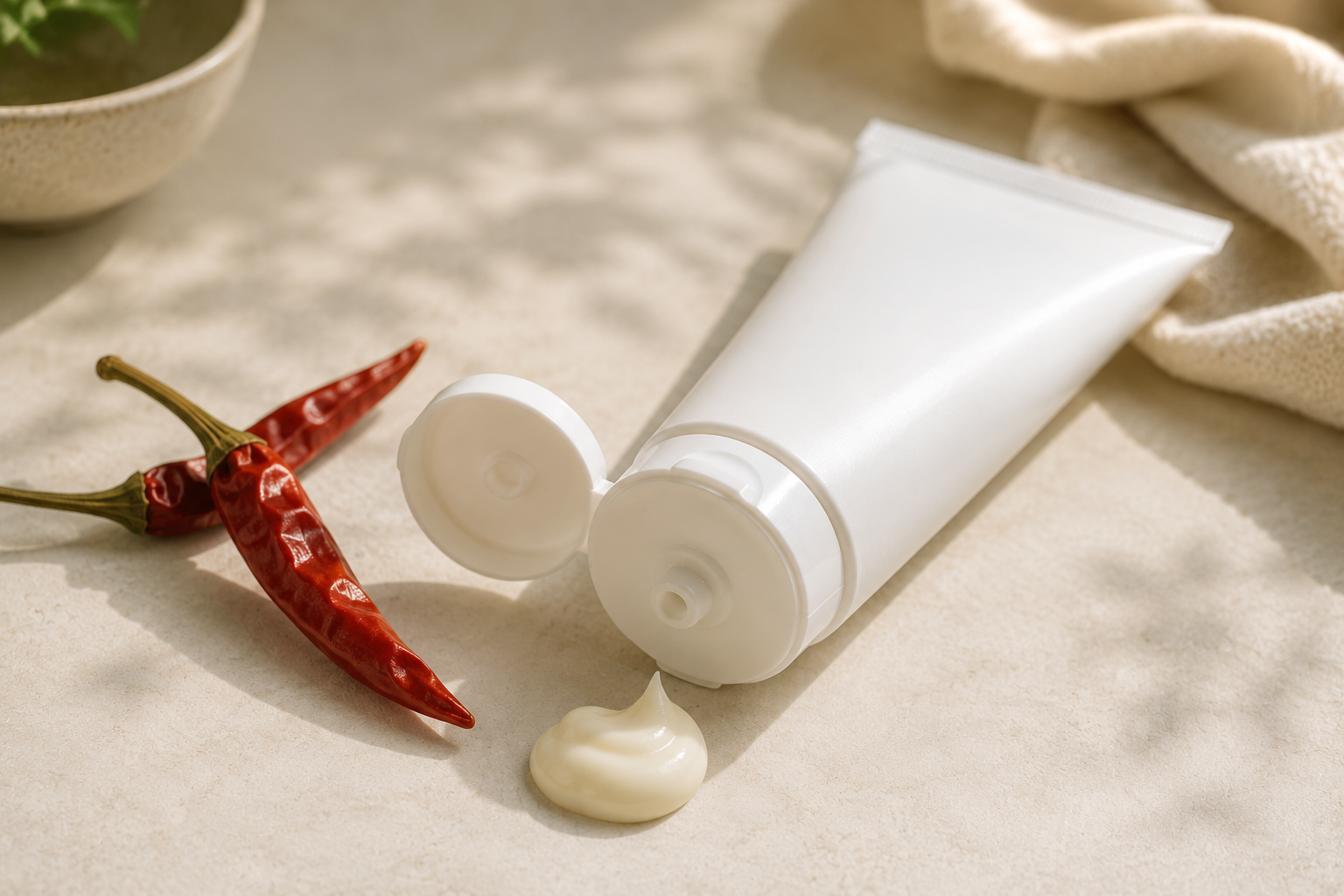
Two topical ingredients have real research for neuropathic pain: capsaicin (from chili peppers, which depletes a pain-signaling chemical in local nerve endings) and lidocaine (a numbing agent for localized pain). Most other nerve creams rely on menthol, camphor, or vitamin blends that create a temporary sensation rather than proven relief. Critically, no cream reaches or repairs the underlying nerve damage.
Let's do the thing the marketing never does: separate the two ingredients with evidence from everything else on the shelf.
The two with actual research
| Ingredient | How it works | The honest verdict |
|---|---|---|
| Capsaicin | Depletes substance P, a pain-signaling chemical, in local nerve endings | Real evidence for neuropathic pain; needs consistent use; burns at first |
| Lidocaine | Numbs the area by blocking local nerve signaling | Used for localized neuropathic pain; works while it's on |
About capsaicin's burn
Fair warning, because this catches people off guard: capsaicin comes from chili peppers, and it burns when you first apply it. That's not a defect — it's the mechanism. For most people the burning eases with repeated use as the nerve endings deplete their pain chemical. But if you weren't expecting it, you'll toss the tube after one try. Now you know.
Everything else on the shelf
Walk the aisle and you'll see menthol, camphor, arnica, MSM, essential oils, and "nerve vitamin" blends. Here's the honest read on those:
- Menthol and camphor create a cooling or warming sensation. That sensation genuinely distracts from pain while it lasts — which is why they feel like they're working. But distraction isn't treatment.
- Vitamin creams (B12, etc.) — your nerves do need B vitamins, but rubbing them on your skin isn't how they get there. That's a systemic issue, not a topical one. (Here's how B12 actually reaches your nerves.)
- Herbal blends vary enormously and mostly lack human trials for nerve pain.
None of that makes them scams, exactly. It makes them comfort products sold at treatment prices.
How to buy one without getting fleeced
- Flip the box over. Find the "Active Ingredients" panel — that's the only part that matters.
- Look for capsaicin or lidocaine with a stated percentage.
- If the actives are menthol/camphor only, know you're buying temporary sensation — and pay accordingly.
- Never apply to broken skin, and wash your hands after capsaicin (keep it away from eyes).
- Check with your doctor if you're using it over large areas or alongside other treatments.
The safety point people miss
If your feet are numb, be careful with any topical that heats, cools, or numbs further. You may not feel a skin reaction or burn developing. Check your skin after use, and never combine a numbing cream with heat sources like heating pads.
The ceiling every cream hits
Here's the sentence worth the whole page: a cream works on your skin and local nerve endings. The damage is in the nerve.
That's why the relief always fades and you always reach for the tube again. You're treating the exit point of the signal, not the reason the signal is being generated. It's the same trap as painkillers — rented quiet, never ownership.
If you've cycled through creams and you're tired of it, the thing you haven't tried is supporting the nerve itself — its nutrient status and the inflammation around it. That's precisely the gap researchers have been studying a specific nutrient combination for.
Drawer full of creams that stopped working?
See the nerve-support approach for people who've tried everything →When to see a doctor
Talk to your doctor before adding a topical if you take other medications or have sensitive/broken skin. Get prompt care for any skin reaction, blistering, or a wound that isn't healing — especially on numb feet with diabetes. And if creams are the only thing managing your pain, that's a signal the underlying cause needs a proper look.
Frequently asked questions
What is the best cream for neuropathy?
Capsaicin and lidocaine are the two topical ingredients with genuine research behind them for neuropathic pain. Most other "nerve creams" — the ones built on menthol, arnica, or vitamin blends — mainly provide temporary sensation rather than proven nerve-pain relief.
Does capsaicin cream work for nerve pain?
It has real evidence for neuropathic pain, though results vary and it takes consistent use. It works by depleting a pain-signaling chemical in local nerve endings. Expect burning when you first apply it — that's the known trade-off, and it usually eases with repeated use.
Do neuropathy creams actually work or is it a placebo?
It depends entirely on the ingredient. Capsaicin and lidocaine have research support. Creams whose main actives are menthol or camphor create a cooling or warming sensation that distracts from pain but doesn't address the nerve. Read the active ingredients, not the front of the box.
Can creams cure neuropathy?
No. Topicals work on the skin and local nerve endings to ease symptoms — they don't reach or repair the underlying nerve damage. They're a comfort tool, not a treatment for the cause.
Is lidocaine safe for neuropathy?
Topical lidocaine is generally well tolerated and is used for localized neuropathic pain. Follow the label on how much and how long to apply, don't use it on broken skin, and check with your doctor — especially if you use it over large areas.
Sources
- Cochrane — Topical capsaicin for chronic neuropathic pain in adults
- PubMed — topical lidocaine for localized neuropathic pain
- NINDS — Peripheral Neuropathy Fact Sheet
- NCCIH — topical herbal products (evidence overview)
This article is for general educational purposes only and is not medical advice. It has not been evaluated by the FDA and is not intended to diagnose, treat, cure, or prevent any disease. Always consult a qualified healthcare provider before starting any new treatment, especially if you have reduced sensation or diabetes.