Burning Feet at Night: Why It Happens and How to Calm It
You survive the whole day. Then you finally lie down — and your feet catch fire. The burning, the prickling, the tossing and turning while the rest of the house sleeps. You are not imagining it, and you are not alone. Here's exactly why the nights are the worst, and what you can do about it before you climb into bed tonight.
Burning feet that flare at night are most often a sign of peripheral neuropathy. They feel worse after dark because daytime distractions fade, your skin cools, and lying down shifts your blood flow — so the same nerve signals hit harder. Common drivers include diabetes, B-vitamin deficiency, and nerve inflammation. A few simple evening habits can take the edge off for some people while the real cause gets sorted out.
Here's the quiet cruelty of burning feet: it waits. All day it lets you cope, distracted, busy, upright. Then the lights go off — and it has you all to itself. If you've spent nights staring at the ceiling, bargaining with your own feet to just stop, this page is for you.
Why the burning gets so much worse at night
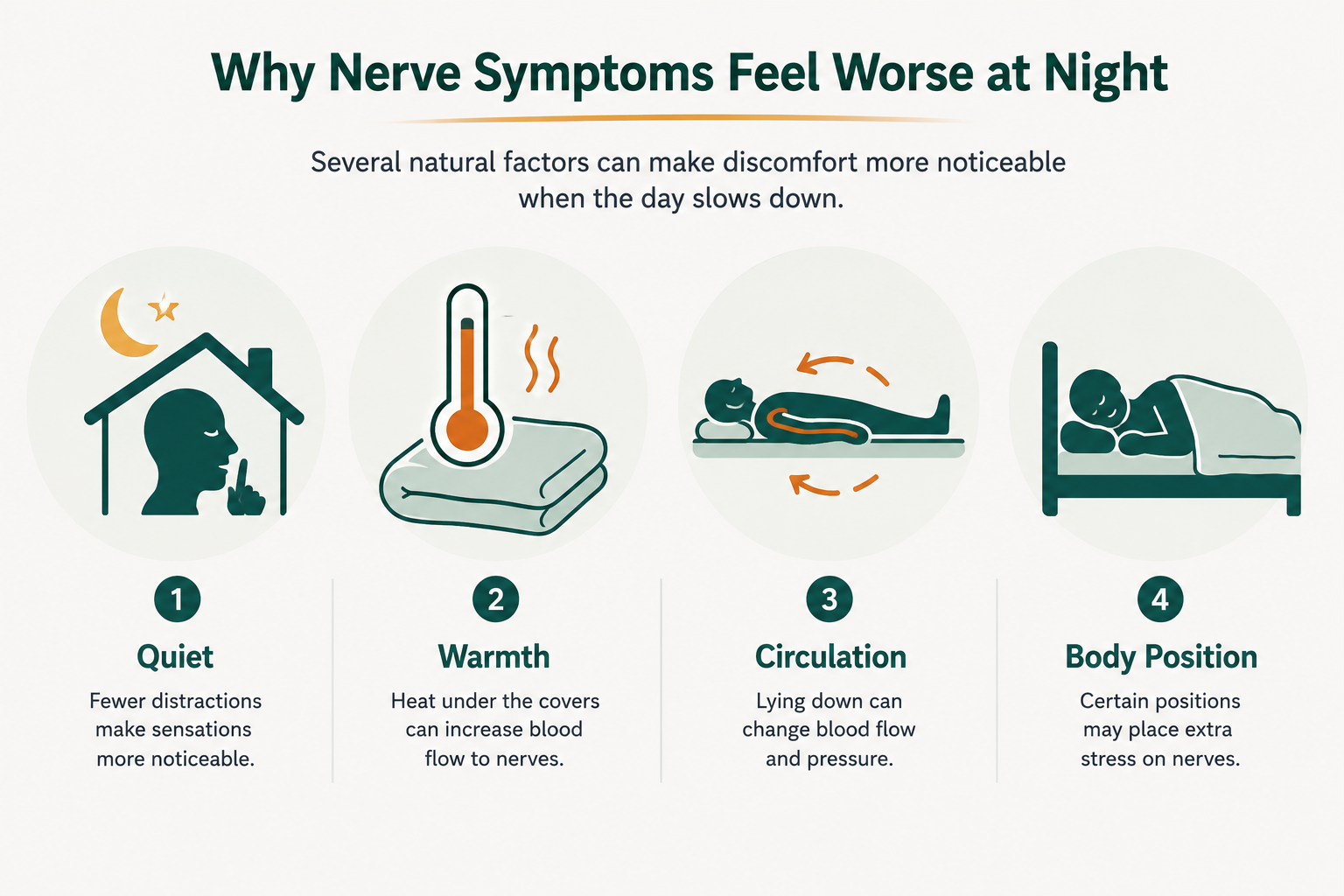
It feels like your nerves are saving their worst for bedtime. They're not — but four very real things gang up on you after dark:
- Nothing to distract you. All day, life drowns out the signal. At night, the house goes silent and there's nothing between you and the fire.
- Your body cools. Evening temperature shifts — and heat trapped under the covers — crank up burning nerve sensations.
- Circulation changes. Lying still moves blood differently than being up and about.
- Position. Pressure and posture in bed change how irritated nerves fire.
The reassurance buried in all that: night isn't damaging your nerves more. It's just pulling away everything that was distracting you. The fire was burning all along.
What's actually setting your feet on fire
Burning feet are a symptom, not a verdict — and several things can light the match:
| Cause | Why it burns |
|---|---|
| Peripheral neuropathy | Damaged nerve fibers misfire — burning, tingling, the works |
| Diabetes / prediabetes | High blood sugar injures the tiny nerves in your feet |
| Vitamin B12 or B1 deficiency | Low levels strip the nerve's protective coating |
| Nerve inflammation | A slow burn that leaves nerves hypersensitive |
| Alcohol, thyroid, and others | Several metabolic causes can feed the fire |
Because the causes overlap, burning feet — especially with tingling or numbness — are worth putting in front of a doctor so the real driver gets named. Want the full map? Here's the deep dive: what causes neuropathy in the feet and legs.
Calm the fire tonight: the at-home routine
Here's what you actually came for. These won't fix the cause — that's the longer game — but they can buy you enough peace to sleep tonight.
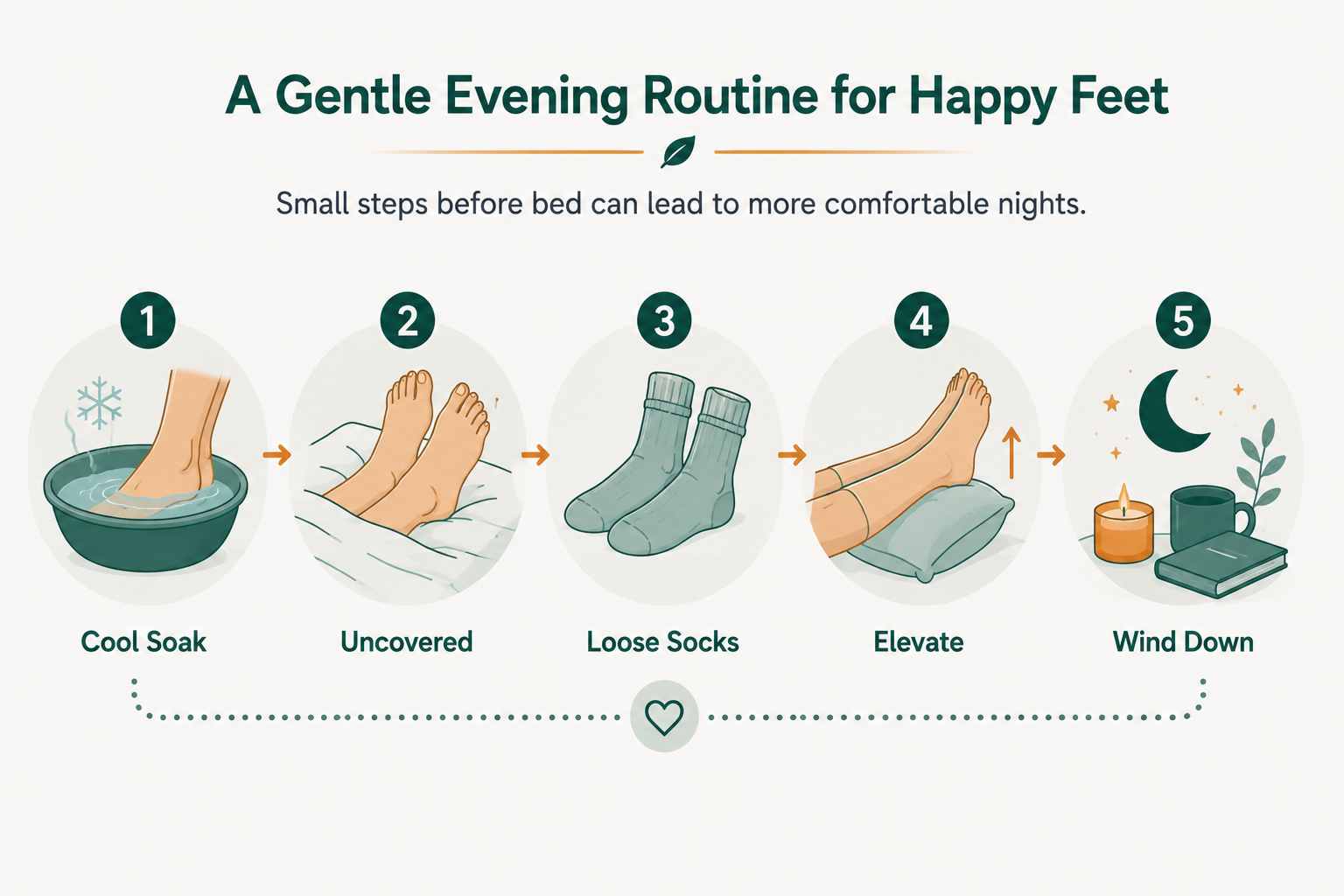
- Cool (not icy) foot soak before bed. A brief, comfortably cool soak calms the burn for a lot of people. Skip the extremes — scalding or ice-cold both backfire.
- Kick the covers off your feet. Let them hang out from under the blanket. Trapped heat feeds the fire.
- Loose, breathable socks and bedding. Pressure and heat both make it worse.
- Prop them up. A pillow under the calves eases that heavy, congested feeling for some.
- Mind your evening minerals. Some people find supporting magnesium and B-vitamin status — through food, or supplements with a doctor's okay — leaves their nerves calmer over time.
- Wind down on purpose. Pain and bad sleep feed each other. Calm the nervous system with a steady bedtime ritual and the burning gets a little quieter.
Most people who beat the nights don't rely on one hack — they build a routine and run it every single night. There's a specific before-bed routine some people swear by, walked through step by step here:
Simple enough to try tonight.
When burning feet mean "call the doctor now"
Most burning feet are the slow, chronic kind. But stop and get seen fast if you notice:
- A wound, sore, blister, or color change on the foot that won't heal (especially with diabetes)
- Sudden burning, numbness, or weakness over hours to days
- Signs of infection — swelling, warmth, redness, fever
- Burning plus spreading weakness or loss of balance
The routine that actually holds
The people who finally sleep aren't chasing one miracle step — they've built a nightly rhythm that stacks the small wins, while separately working with their doctor on the cause underneath. Relief-in-the-moment and root-cause repair are two different jobs. You need both, and you deserve both.
Frequently asked questions
Why are my feet burning at night but not during the day?
The nerve irritation is there all day — but at night the distractions vanish, your skin cools, and lying down changes your circulation, so the same signals feel far louder. Night doesn't create new damage. It just clears the stage for what was already there.
How can I stop burning feet at night fast?
In the moment: a comfortably cool foot soak, feet uncovered and cool, loose breathable socks and bedding, and a slight elevation. These take the edge off — they don't fix the cause, which still needs a doctor's eye.
Is burning feet always neuropathy?
Not always, but peripheral neuropathy is the usual suspect. Diabetes, B12 or B1 deficiency, nerve inflammation, thyroid issues, and alcohol can all play a part. Burning feet with tingling or numbness deserve a work-up to name the cause.
Can vitamin deficiency cause burning feet?
Yes. Low vitamin B12 or B1 (thiamine) can chip away at nerve health and set your feet on fire. Both show up on a blood test — and caught early, both are often correctable.
Does soaking feet help burning neuropathy?
A brief, comfortably cool soak can quiet the burning for some people. Skip the extremes — scalding or ice-cold water can leave irritated nerves angrier than before.
Sources
- NINDS — Peripheral Neuropathy Fact Sheet
- Cleveland Clinic — Burning feet syndrome
- Mayo Clinic — Peripheral neuropathy (symptoms, red flags)
- NIH Office of Dietary Supplements — Vitamin B12 / B1
- PubMed — nocturnal exacerbation of neuropathic pain
This article is for general educational purposes only and is not medical advice. It has not been evaluated by the FDA and is not intended to diagnose, treat, cure, or prevent any disease. Always consult a qualified healthcare provider about your symptoms and before changing any treatment or supplement routine.