Turmeric for Nerve Pain: Does It Actually Work?
You tried turmeric. You stirred it into your food, maybe choked down a "golden milk," and felt exactly nothing. So you wrote it off. Here's the twist that changes everything: it almost certainly wasn't the turmeric that failed you — it was the dose and the absorption. Let me show you the difference between what's in your spice rack and what researchers actually study.
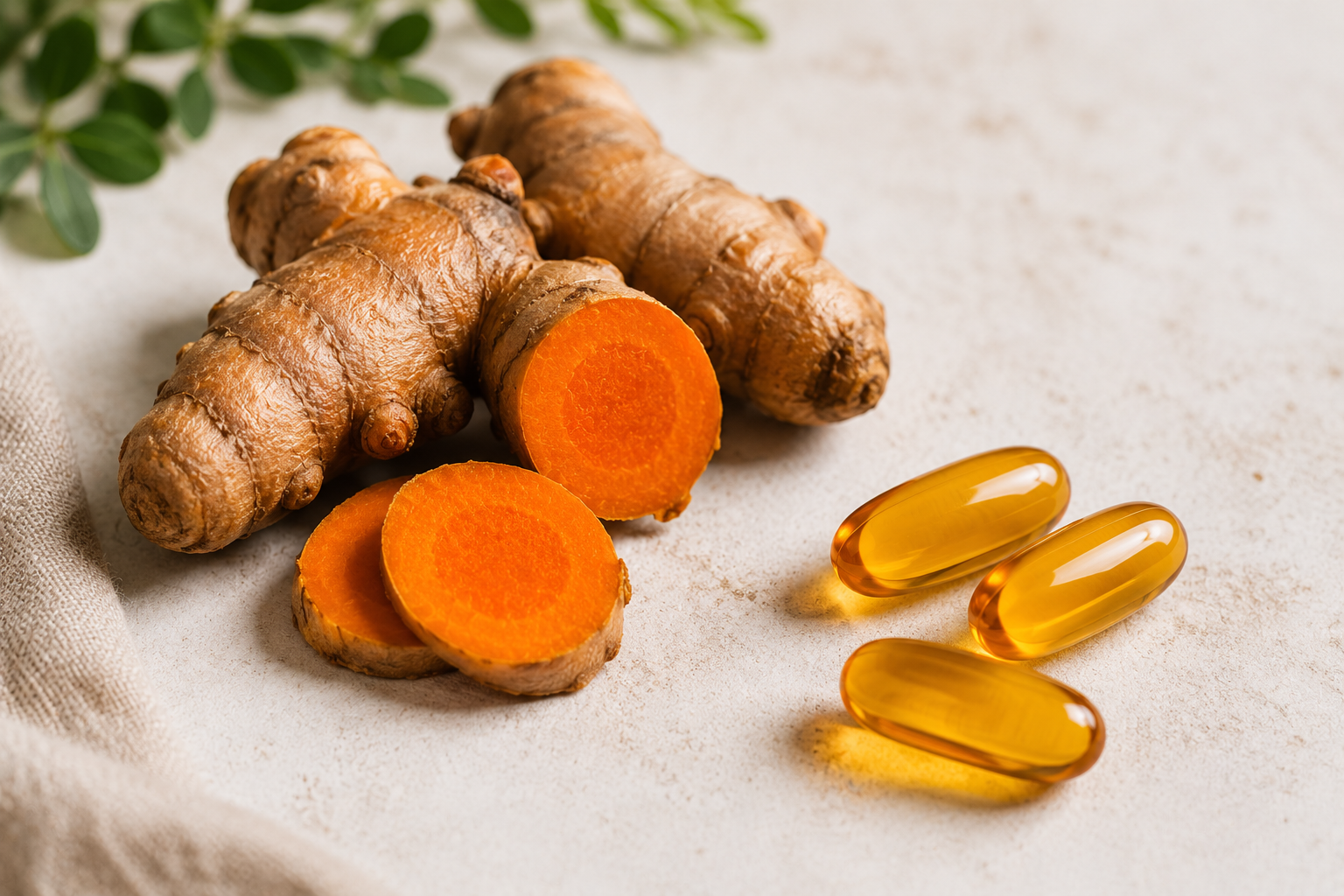
Curcumin, the active compound in turmeric, is studied for nerve pain because of its anti-inflammatory and antioxidant effects, and several small human and animal trials report reduced neuropathic symptoms. But ordinary culinary turmeric is only about 2–5% curcumin and barely absorbs — which is why researchers use standardized, concentrated extracts taken consistently, not a spice sprinkled on dinner.
If you gave turmeric an honest shot and it did nothing, you probably concluded it's another overhyped "miracle." Fair. But before you slam that door for good, understand why it flopped — because the reason is fixable, and it's the whole story.
What curcumin is actually doing in there
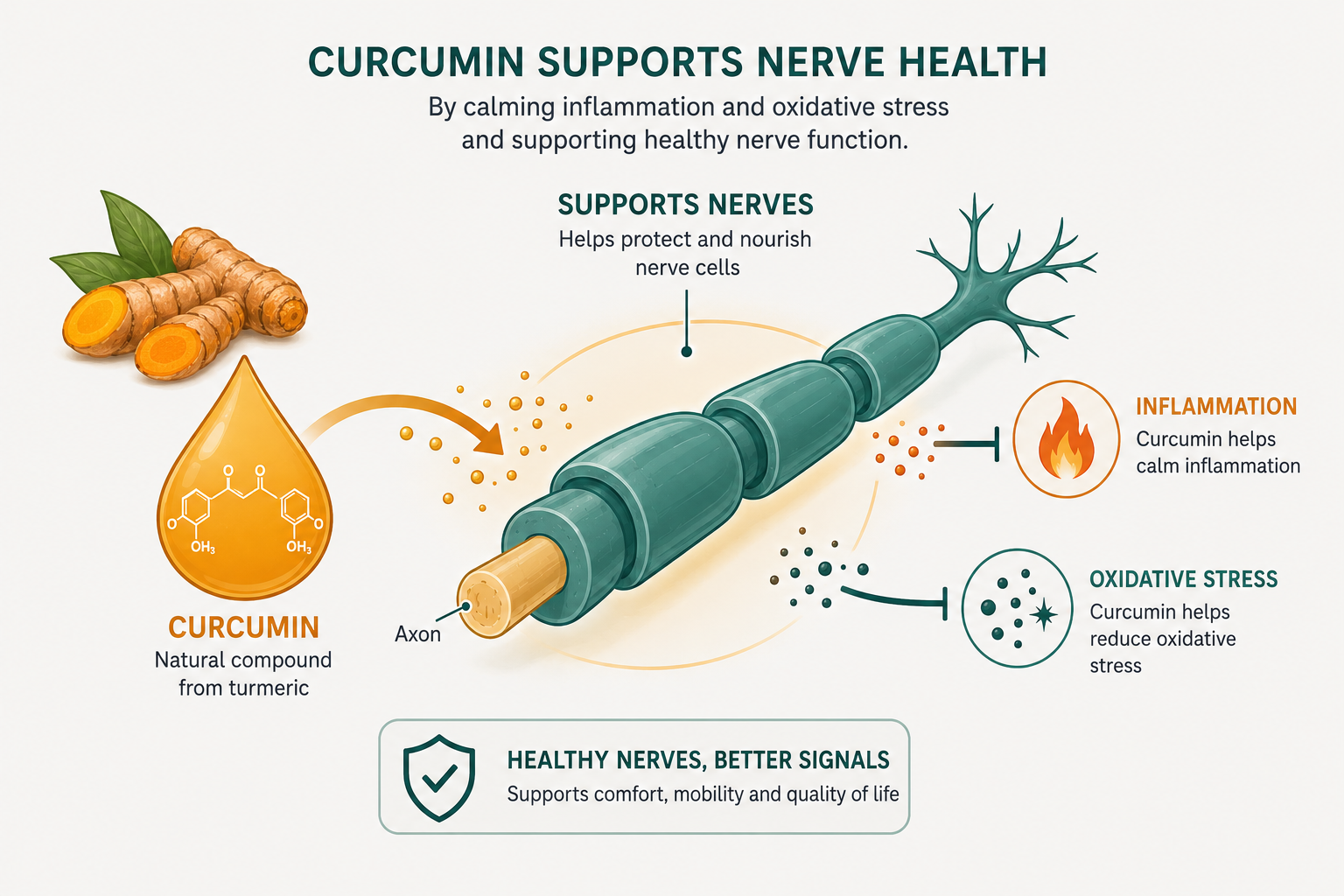
Curcumin is the compound that gives turmeric its screaming-yellow color — and it's what nearly every study is really about. Researchers chase it for nerve pain for two reasons that matter to you:
- It fights inflammation. Curcumin nudges down several inflammatory pathways — and inflammation is one of the quiet fires that wears the coating off your nerves.
- It's an antioxidant. It helps mop up oxidative stress, the cellular "rust" that grinds nerve fibers down over time.
Read that again, because it's the point: curcumin isn't studied to numb your pain like a drug. It's studied to go after the conditions that keep your nerves raw and irritable in the first place. Different target entirely.
Why the spice in your cabinet let you down
Two problems stack on top of each other — and together they doom the kitchen version:
Problem one: it's barely curcumin. At 2–5%, you'd have to eat a truly absurd amount of turmeric every day to reach what studies use. Nobody's doing that.
Problem two: your body throws most of it away. Curcumin on its own is notoriously hard to absorb — most of what you swallow gets processed and flushed before it does a thing. That's why serious research doesn't touch plain powder.
So how do researchers get around it? A few tricks:
| The trick | What it does |
|---|---|
| Standardized extract | Cranks curcumin up to ~95% instead of 2–5% |
| Piperine (black pepper extract) | In a human study, 20 mg piperine boosted curcumin absorption by about 2,000% (Shoba et al. 1998) |
| Special delivery forms (phytosome, liposomal) | Engineered to sneak far more curcumin into the bloodstream |
| Taken with fat | Curcumin is fat-soluble — it rides in better with a meal |
Now you see it. "Turmeric didn't work for me" and "a standardized, well-absorbed curcumin taken every day for weeks" are two completely different experiments. You only ran the first one.
What the research honestly shows (and doesn't)
I'm going to be straight with you, because you've been burned by hype before. The curcumin research is promising but still young — mostly small human trials and a bigger stack of animal studies, not giant definitive ones.
Here's what that body of work leans toward:
- Small human trials and a lot of animal data report lower neuropathic pain scores with concentrated curcumin.
- Benefits build gradually over weeks — this is a slow burn, not a switch.
- It's usually studied next to other nerve nutrients, not solo.
And here's what it does not show: a guaranteed cure or an instant fix. Anyone screaming that turmeric "reverses neuropathy in days" is lying to your wallet. The honest read? Concentrated curcumin is a credible nerve-support player worth understanding — not a magic bullet.
The dose and timeline that actually match the studies
This isn't a prescription — that's between you and your doctor — but here's the shape of what research uses:
- Standardized curcumin extract, never raw powder
- Usually with piperine or a special delivery form
- Taken with food
- Every day, for weeks — because the effect stacks up over time
That last line is where most people blow it. Curcumin isn't an aspirin you grab when it hurts. It's daily reinforcement.
Why turmeric and alpha-lipoic acid keep showing up together
Notice how curcumin is almost never sold alone in nerve formulas? It's usually paired with alpha-lipoic acid (ALA) — and that's no accident. ALA is one of the most-studied supplements for diabetic neuropathy, with trials using 600 mg a day reporting less burning, tingling, and numbness. Curcumin comes at inflammation; ALA comes at oxidative stress; the B vitamins rebuild the coating. Three angles, one nerve. That combination logic is exactly what today's research is built on.
Want to see the exact combination — turmeric, ALA, and B vitamins — being studied?
See the at-home turmeric approach researchers are studying →Safety, interactions, and who should be careful
Curcumin is usually well tolerated — but "natural" doesn't mean "harmless." Clear it with your doctor first, especially if you:
- Take blood thinners (curcumin can thin blood a little more)
- Have gallbladder trouble (it can stir the gallbladder up)
- Are on diabetes medication (possible added drop in blood sugar)
- Are pregnant or breastfeeding (supplement doses aren't well studied)
- Have surgery coming up (stop it beforehand, per your doctor)
A high-dose extract is a different animal from the pinch in your curry. Respect it like the active compound it is.
Frequently asked questions
Does turmeric actually help nerve pain?
Curcumin — turmeric's active compound — is studied for nerve pain because of its anti-inflammatory and antioxidant effects, and several small trials report reduced symptoms. But the turmeric in your spice rack is too weak and too poorly absorbed to match those studies, which use concentrated, well-absorbed extracts taken consistently.
How much curcumin should I take for neuropathy?
Studies use standardized extracts, not raw turmeric, usually paired with piperine or a special delivery form and taken with food over several weeks. There's no universal dose — sort out the right amount with your provider, especially if you take other medications.
How long does turmeric take to work for nerves?
Weeks, not overnight. Curcumin builds up as daily support — it's not an on-demand painkiller. If you tried it for a few days and quit, you never really tested it.
Is turmeric better than gabapentin?
They're not even playing the same game. Gabapentin muffles the pain signal; curcumin is studied for the inflammation and oxidative stress around the nerve. Never drop a prescribed medication without talking to your doctor.
What's the best form of turmeric for nerve health?
A standardized curcumin extract with an absorption booster like piperine (or a specialized delivery form), taken with food. Plain kitchen turmeric is not it.
Sources
- PubMed — curcumin for neuropathic pain (human RCTs + animal studies)
- Shoba G. et al., Planta Medica 1998 (PubMed 9619120) — piperine increases curcumin bioavailability ~2,000%
- PubMed — ALADIN / SYDNEY trials, alpha-lipoic acid in diabetic neuropathy
- NCCIH (NIH) — Turmeric (safety, interactions)
- Mayo Clinic — curcumin interactions (blood thinners, gallbladder, surgery)
This article is for general educational purposes only and is not medical advice. It has not been evaluated by the FDA and is not intended to diagnose, treat, cure, or prevent any disease. Always consult a qualified healthcare provider before starting any new supplement, especially if you take medication or have a health condition.