Numbness in Feet That Comes and Goes: What It Means
Here one hour, gone the next. Easy to shrug off — which is exactly the problem. That flickering numbness is usually your nervous system's first phone call. And the fact that it still comes and goes is the good news: you caught it early, while there's still everything to save. Don't waste that head start.

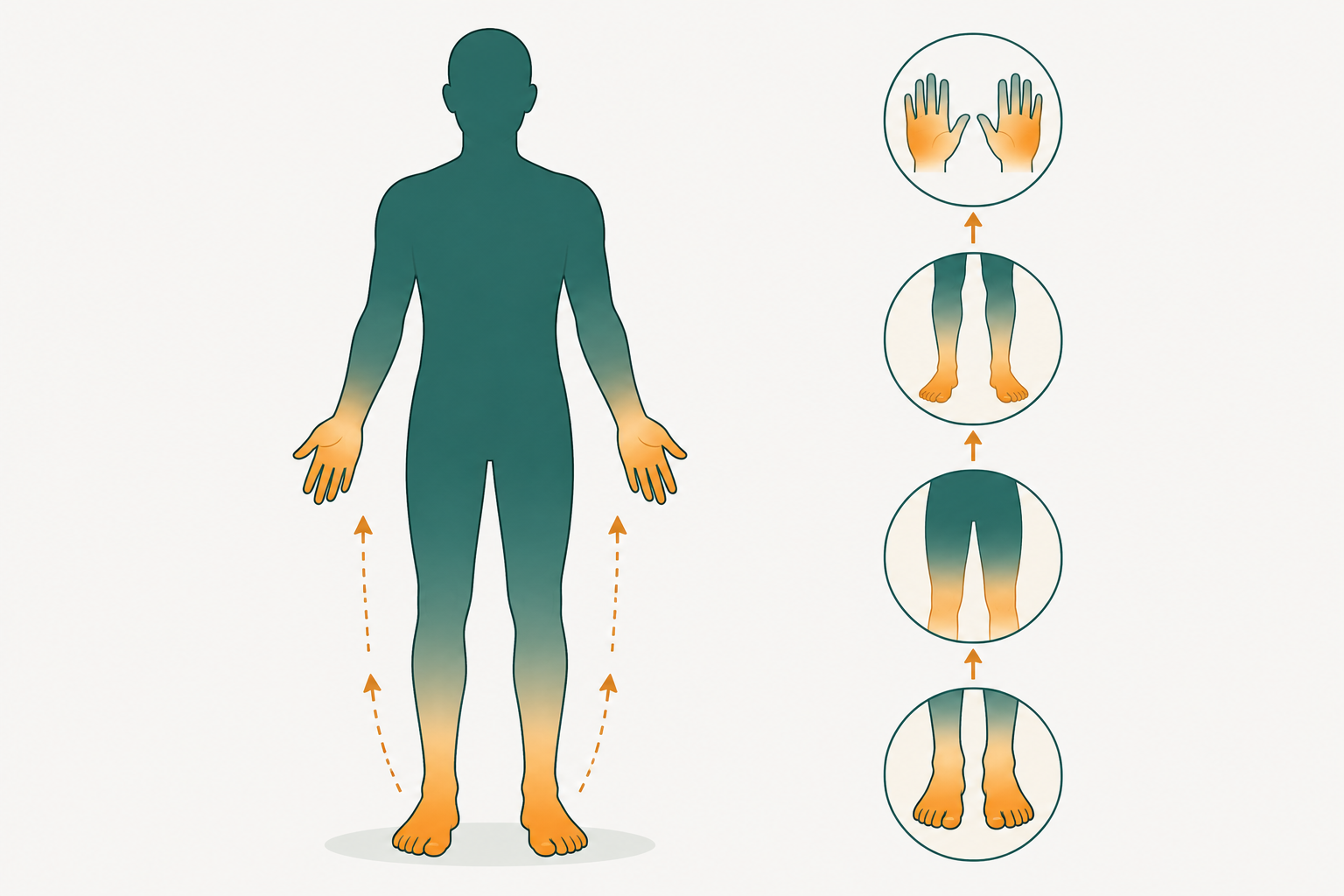
Numbness in the feet that comes and goes is often an early sign of peripheral neuropathy — nerve irritation that isn't constant yet. Common causes include vitamin B12 deficiency, diabetes or prediabetes, a pinched nerve, and poor circulation. Because intermittent numbness can be the stage before symptoms turn permanent, it's worth finding the cause now, while the nerve damage is still limited and manageable.
Most people wait. They tell themselves it's nothing, they slept on it wrong, it'll pass. And it does pass — until the day it doesn't. The window you have right now, while the numbness still flickers instead of staying, is the most valuable window you'll get. Here's how to use it.
Why the numbness switches on and off
In the earliest phase, irritated nerve fibers don't misfire constantly — they flicker. So the numbness shows up with a trigger and vanishes when it's gone:
- Sitting or crossing your legs (a little pressure on the nerve)
- Cold, or a dip in circulation
- Night-time, when the distractions fall away
- After standing or walking a long stretch
That on-off pattern is the tell of early nerve trouble. Leave it, and numbness tends to stop flickering and start staying. Which is precisely why the flickering stage is the one you pounce on.
What's behind numb feet
| Cause | Why it numbs your feet |
|---|---|
| Peripheral neuropathy | Damaged nerve fibers dial down sensation |
| Vitamin B12 deficiency | Low B12 strips the nerve's protective coating |
| Diabetes / prediabetes | High blood sugar injures the nerves in your feet |
| Pinched nerve (back or leg) | Compression cuts the signal off mid-line |
| Poor circulation | Less blood flow, less nerve function |
| Alcohol / thyroid issues | Metabolic troublemakers behind the scenes |
Look how many of those are findable and, in some cases, fixable — B12 and blood sugar above all. That's the hopeful thread: intermittent numbness often points straight at something you can actually do something about. Full breakdown here: what causes neuropathy in the feet and legs.
Why "it comes and goes" is your best shot
Straight talk — not to scare you, but because timing is everything. Numbness that flickers is usually the earliest stage, before it locks in. Damage caught here is more likely to be limited, and the common causes respond best when you hit them early. Wait until the numbness is permanent, and you're negotiating over far less healthy nerve.
That's the whole case for moving now: not fear — just a head start you'd be crazy to waste. Finding what's driving your numbness is step one.
When numb feet mean "get help now"
Most flickering numbness is the slow kind. But get seen immediately if you have:
- Sudden numbness, especially on one side — or with weakness, slurred speech, or a drooping face. That can be a stroke: call emergency services now.
- Numbness with a foot wound, sore, or color change that won't heal (especially with diabetes)
- Fast-spreading numbness or weakness
- Numbness after a fall or injury
Anything sudden or one-sided is not "wait and see." This page is about the slow, flickering numbness of early nerve trouble — not an emergency.
Frequently asked questions
Why do my feet go numb and then normal again?
Early nerve irritation flickers instead of staying constant. Numbness gets triggered by pressure (like sitting), cold, or the quiet of night, then fades when the trigger passes. That on-and-off pattern is the classic opening act of peripheral neuropathy.
Is numbness in the feet serious?
It's an early warning worth heeding, because it often comes before the constant, harder-to-reverse stuff. Most intermittent numbness isn't an emergency — but sudden, one-sided, or wound-related numbness needs care now.
Can B12 deficiency cause numb feet?
Yes. Low B12 strips the protective coating off your nerves and is a common, testable, and often correctable cause of numb feet — especially over 50 or on metformin.
Should I worry about numbness that comes and goes?
Don't panic — but don't ignore it either. Intermittent numbness is usually the earliest and most fixable stage, so tracking down the cause now is your best shot at stopping it before it settles in for good.
What deficiency causes numbness in feet?
Vitamin B12 is the headliner, with B1 (thiamine) close behind. Both are simple blood tests — worth asking for.
Sources
- NINDS — Peripheral Neuropathy Fact Sheet (longest-nerves-first pattern)
- Mayo Clinic — Numbness in feet / peripheral neuropathy
- NIH ODS — Vitamin B12 (deficiency and nerve symptoms)
- American Stroke Association — stroke warning signs (FAST)
This article is for general educational purposes only and is not medical advice. It has not been evaluated by the FDA and is not intended to diagnose, treat, cure, or prevent any disease. Always consult a qualified healthcare provider about your symptoms.