Foods to Avoid With Neuropathy (and What to Eat Instead)
Here's a hard truth most people never connect: some of what's on your plate three times a day may be quietly feeding the fire in your feet. Not through magic — through two very specific channels your nerves care about deeply. And unlike almost everything else about neuropathy, this is a lever you control at every single meal.
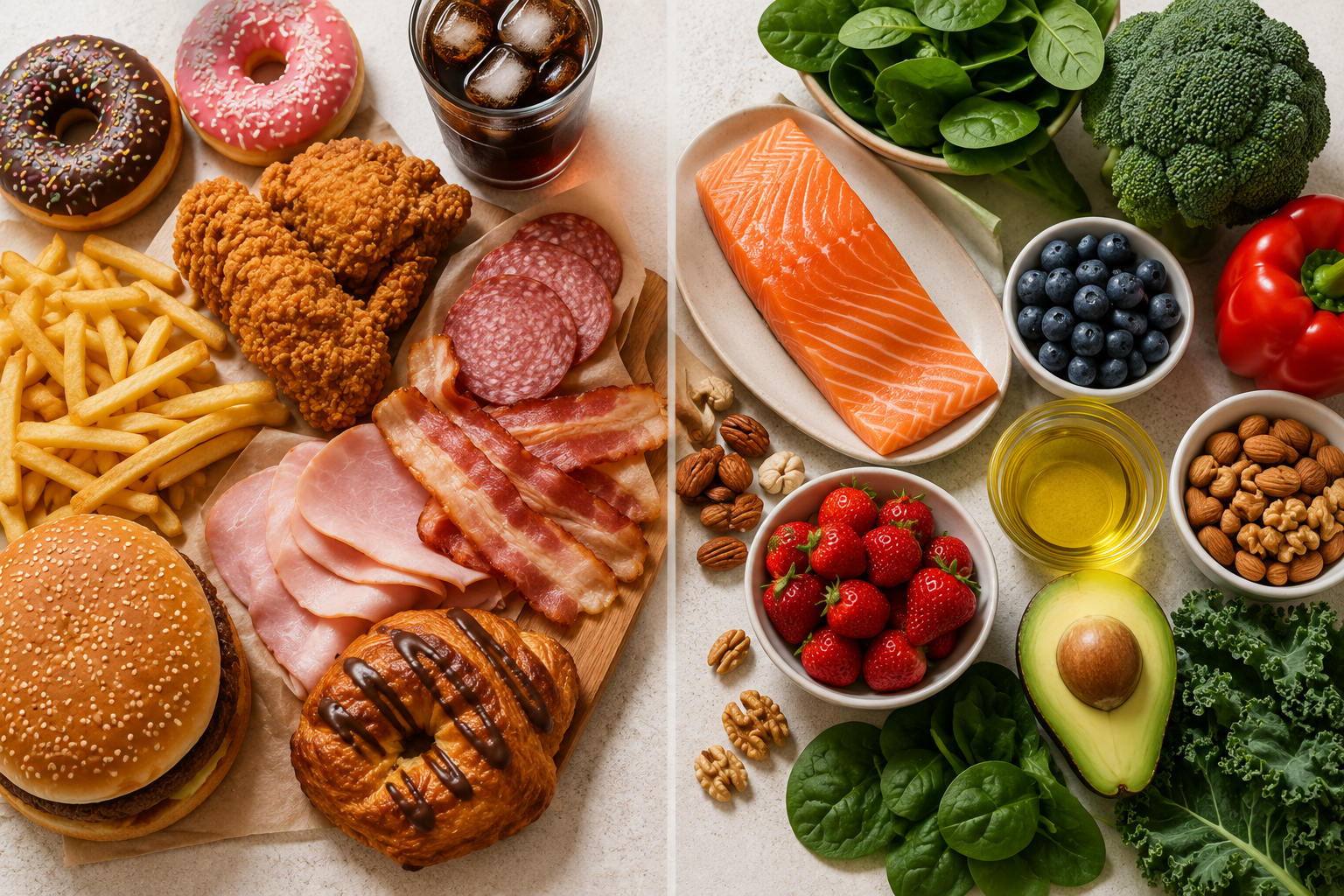
The foods most worth avoiding with neuropathy are added sugar and refined carbs, heavy alcohol, fried and heavily processed foods, processed meats, and trans fats. They hit your nerves through two channels: blood sugar (high blood sugar injures the tiny vessels feeding your nerves) and inflammation (which wears at the nerve's protective coating). Replacing them with a Mediterranean-style pattern supports both.
Let's skip the vague "eat healthy" advice you've heard a hundred times. Your nerves don't care about vague. They care about two things — your blood sugar and your inflammation levels — and every meal either helps or hurts on both counts. Once you see food through that lens, the list writes itself.
The two channels food uses to reach your nerves
Channel one: blood sugar. This is the big one. High blood sugar damages the tiny blood vessels that deliver oxygen and nutrients to your nerves — starving them. It's the single most common driver of neuropathy on the planet. Every spike is another small hit.
Channel two: inflammation. Chronic inflammation gnaws at the myelin coating that insulates your nerves. And what you eat is one of the strongest daily influences on how inflamed you are.
Now look at the "avoid" list below — and notice that almost every item hits both channels at once.
The foods working against your nerves
| Food | What it does to your nerves |
|---|---|
| Added sugar & sweets | Spikes blood sugar and drives inflammation — the double hit |
| Refined carbs (white bread, pastries, white rice) | Your body treats them like sugar. Same spike, same damage. |
| Heavy alcohol | Directly toxic to nerve fibers and strips the B vitamins nerves need to repair |
| Fried & heavily processed foods | Linked to higher inflammatory markers |
| Processed / cured meats | Associated with more inflammation |
| Trans fats (some packaged baked goods) | Among the most inflammatory things you can eat |
| Sugary drinks | The fastest blood sugar spike there is — liquid damage |
Notice alcohol on that list. It's not just "empty calories" for someone with nerve damage — alcohol-related neuropathy is a recognized cause in its own right, because it poisons the nerve and drains its repair materials at the same time.
What to eat instead
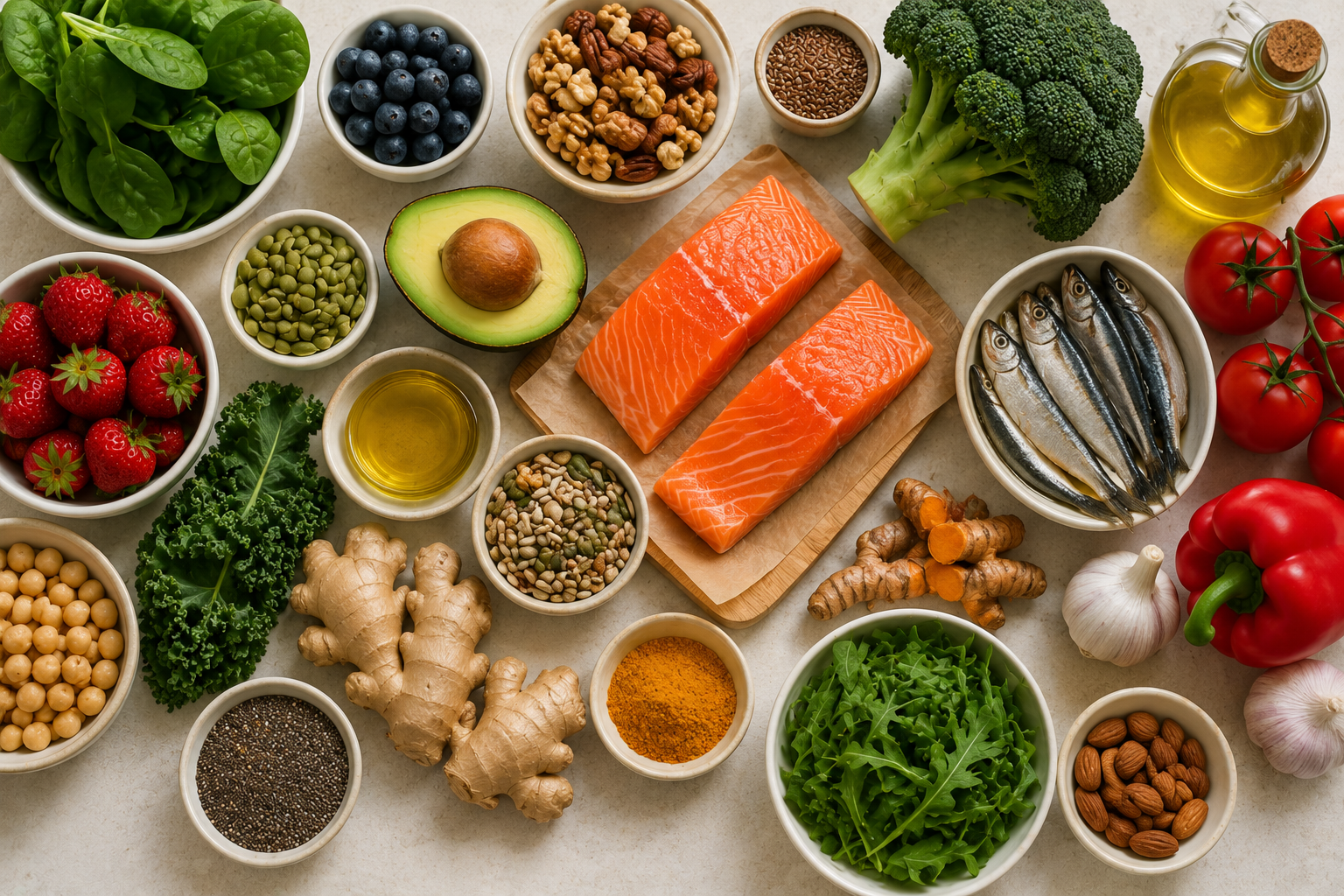
Here's the part that actually gives you something to do. Load your plate with foods that do double duty — calm inflammation and deliver the raw material nerves rebuild with:
- Fatty fish (salmon, sardines, mackerel) — omega-3s plus B12
- Eggs and dairy — B12, the vitamin your myelin depends on
- Leafy greens & colorful vegetables — folate, antioxidants, fiber
- Berries and whole fruit — polyphenols without the sugar spike of juice
- Olive oil, nuts, seeds — anti-inflammatory fats
- Legumes & whole grains — steadier blood sugar, B vitamins
- Turmeric & ginger — anti-inflammatory spices you can actually cook with
Put it together and it's a Mediterranean-style pattern — the eating style with the most research for lowering inflammation, and one that happens to be loaded with the B vitamins your nerves rebuild with.
The B12 detail worth knowing
One specific nutrient deserves its own mention: B12. It comes almost entirely from animal foods, absorption drops with age, and two of the most common medications on earth — metformin and acid reducers — quietly drain it. Low B12 causes neuropathy all by itself. If you're over 50, plant-based, or on those drugs, food alone may not cut it: here's why a B12 test matters.
How to actually do this without going crazy
- Kill the sugary drinks first — biggest, easiest win
- Then the added sugar and refined carbs — the blood sugar channel is your top priority
- Cut the heavy drinking if that's in play — non-negotiable for nerves
- Add before you subtract — crowd out junk with fish, greens, nuts
- Give it weeks — blood sugar moves fast, nerves move slowly
You don't need to be perfect. You need to lower the load, consistently.
Where diet hits its ceiling
Now the honest part, because you deserve it: diet supports your nerves — it doesn't rebuild them on its own. Food gets your blood sugar and inflammation moving in the right direction, but the nerve still needs its specific raw materials and something working on the inflammation already there. That's exactly why researchers have been studying a specific nutrient combination alongside dietary change.
Doing the diet work and want to know what else supports the nerve itself?
See the at-home nutrient approach researchers are studying →When to see a doctor
Talk to your doctor before major dietary changes if you have diabetes or take medication — especially blood sugar meds, since improving your diet can change your dosing needs. And get your B12 checked if you're over 50, on metformin or acid reducers, or eating plant-based.
Frequently asked questions
What foods should you avoid with neuropathy?
The main offenders are added sugar and refined carbs (they spike blood sugar, the number-one driver of nerve damage), heavy alcohol, fried and heavily processed foods, processed meats, and trans fats. They work through two channels that matter for nerves: blood sugar and inflammation.
Does sugar make neuropathy worse?
Yes — this is the clearest link on the list. Blood sugar spikes injure the tiny vessels that feed your nerves, and high blood sugar is the single most common driver of neuropathy. Cutting added sugar is the highest-leverage diet change you can make.
Is alcohol bad for neuropathy?
Heavy alcohol is a double hit — it's directly toxic to nerve fibers and it strips the B vitamins your nerves need to repair. Alcohol-related neuropathy is a recognized cause in its own right.
What foods are good for nerve repair?
Foods rich in B12 and B vitamins (fish, eggs, dairy, leafy greens, legumes), omega-3 fatty fish, colorful vegetables and berries, olive oil, nuts, and anti-inflammatory spices like turmeric and ginger. Essentially a Mediterranean-style pattern.
How long until diet changes help neuropathy?
Give it weeks, not days. Blood sugar responds relatively fast, but nerve symptoms shift gradually. Diet is a foundation that supports everything else — not an overnight switch.
Sources
- Harvard T.H. Chan School of Public Health — anti-inflammatory eating
- ADA / NIDDK — blood sugar control and diabetic neuropathy
- NIH Office of Dietary Supplements — Vitamin B12
- PubMed — Dietary Inflammatory Index and systemic inflammation
- NINDS — Peripheral neuropathy (alcohol-related causes)
This article is for general educational purposes only and is not medical advice. It has not been evaluated by the FDA and is not intended to diagnose, treat, cure, or prevent any disease. Always consult a qualified healthcare provider about your symptoms and before making major dietary changes, especially if you have diabetes or take medication.