Chemo-Induced Neuropathy (CIPN): Why It Happens and What Helps
You survived the cancer. Nobody warned you the tingling and numbness might stick around long after the last infusion. That lingering damage has a name — CIPN — and if you feel like it's been brushed aside, you're not imagining that. Here's what's actually happening in your nerves, and what the research says can help.
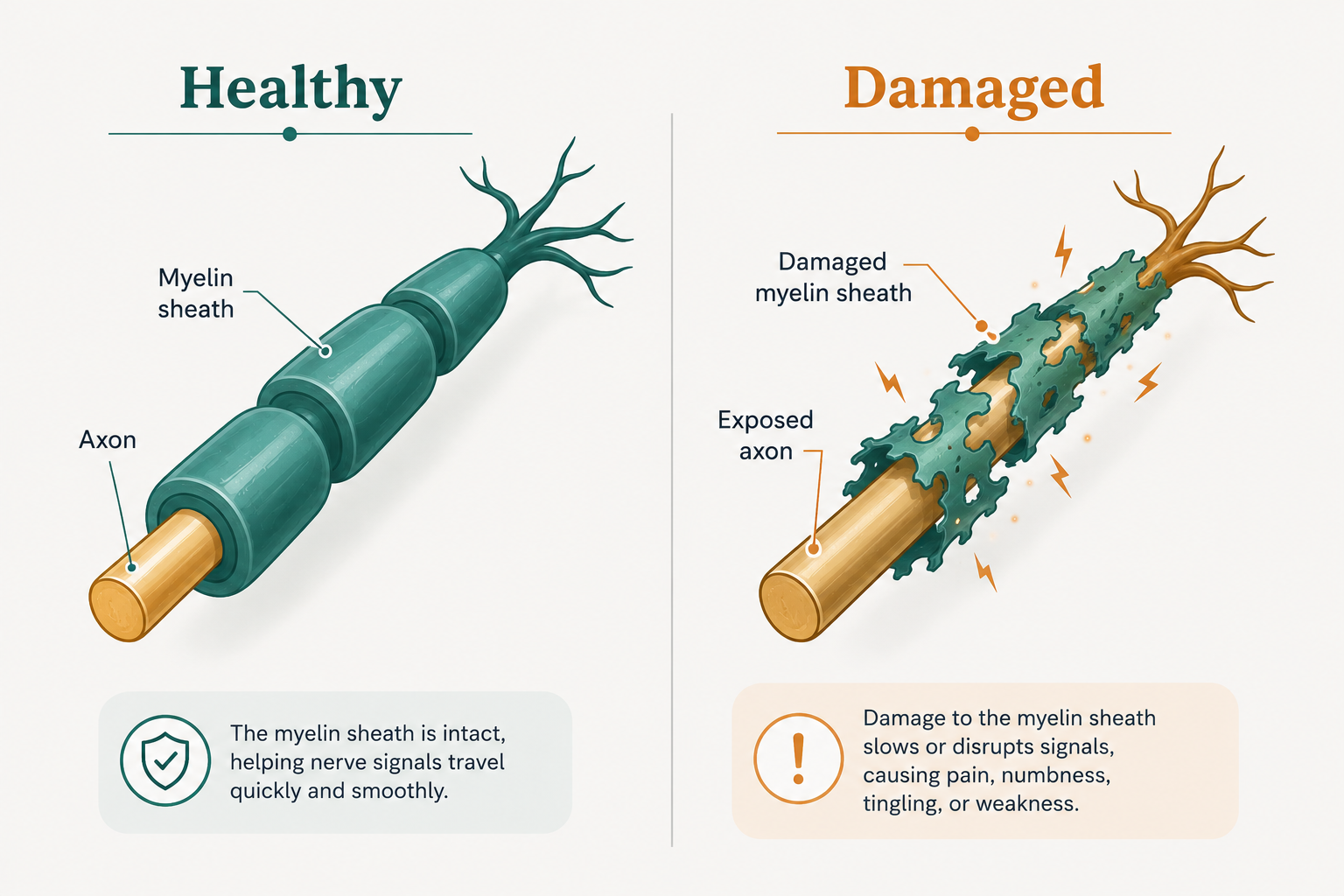
Chemotherapy-induced peripheral neuropathy (CIPN) is nerve damage caused by certain cancer drugs that are directly toxic to nerve fibers. It typically shows up as tingling, numbness, burning, or cold sensitivity in the hands and feet, often in a "glove-and-stocking" pattern. For many people it improves gradually over months after treatment ends — though for some it lingers. Supportive care and, importantly, coordination with your oncology team matter most.
Let's start with what you deserve to hear plainly: CIPN is real, it's common, and it is badly under-discussed. If your care felt laser-focused on beating the cancer and vague about the numbness left behind, that's a gap in the system — not a sign that nothing can be done.
Why chemo damages your nerves
Some of the most effective cancer drugs come with a hard trade-off: they're directly toxic to peripheral nerve fibers. They can damage the long nerves running to your hands and feet — injuring the fibers themselves and their protective coating. That's why CIPN hits in that classic glove-and-stocking pattern, and why it lingers even after the drug is gone: nerves heal slowly.
What CIPN feels like
- Tingling or numbness in the hands and feet
- Burning or shooting pain
- Cold sensitivity (especially with platinum drugs — cold can trigger jolts)
- Clumsiness, trouble with buttons or balance
The chemo drugs most likely to cause it
| Drug class | Examples |
|---|---|
| Platinum drugs | Oxaliplatin, cisplatin |
| Taxanes | Paclitaxel, docetaxel |
| Vinca alkaloids | Vincristine |
| Others | Bortezomib |
Your oncologist knows your exact regimen and its risk — always the best person to ask about your specific case.
The good news about recovery
Here's the encouraging part most people cling to: for many, CIPN improves gradually over the months after treatment ends, as the nerves slowly repair. It often peaks around the end of chemo and then eases. Recovery isn't guaranteed or total for everyone — but "it slowly got better" is a very common story.
⚠️ The one warning you can't skip
During active chemo, do not add supplements or antioxidants without your oncologist's okay. Some can interfere with how chemotherapy works against your cancer. This is not the place to freelance — anything you consider must go through your cancer care team first.
What's studied to help
- Duloxetine has the strongest evidence for CIPN pain (a prescription — discuss with your team)
- Exercise and physical therapy are studied for function and symptoms
- Dose adjustments — sometimes your oncologist modifies the regimen
- Supportive nutrients for nerve health — but see the warning above about timing with active treatment
Once you're through active treatment and your oncologist gives the green light, many people look at approaches that support the nerve's recovery — nutrient status and inflammation. Researchers have been studying one specific nutrient combination along those lines.
Clear anything new with your oncology team first.
When to see a doctor
Report any new or worsening numbness, pain, or weakness to your oncology team promptly — sometimes catching it lets them adjust your treatment. And get urgent care for sudden severe weakness, or a non-healing wound on a numb foot.
Frequently asked questions
Does chemo-induced neuropathy go away?
For many people it improves gradually over months after chemo ends, as the nerves slowly recover. For some it lingers or is permanent. How much comes back varies with the drug, the dose, and the person — but improvement over time is common.
How long does CIPN last?
It varies widely — weeks to months for many, longer or permanent for some. Symptoms often peak around the end of treatment and then slowly ease. Your oncology team can give guidance specific to your regimen.
What helps chemo-induced neuropathy?
Duloxetine has the most evidence for CIPN pain. Beyond that, exercise, physical therapy, and supportive nutrients are studied, and your oncologist may adjust the chemo dose. Always coordinate anything you add with your cancer care team.
Can I take supplements for CIPN during chemo?
This is critical: some supplements and antioxidants can interfere with how chemotherapy works. Never add anything during active treatment without clearing it with your oncologist first.
Which chemo drugs cause neuropathy?
Platinum drugs (like oxaliplatin, cisplatin), taxanes (paclitaxel, docetaxel), vinca alkaloids, and bortezomib are the most common culprits. Your oncologist can tell you the risk for your specific regimen.
Sources
- National Cancer Institute — Nerve problems (peripheral neuropathy) and cancer treatment
- ASCO guideline — prevention and management of CIPN (duloxetine)
- PubMed — exercise for chemotherapy-induced peripheral neuropathy
- PubMed — antioxidant–chemotherapy interaction cautions
This article is for general educational purposes only and is not medical advice. It has not been evaluated by the FDA and is not intended to diagnose, treat, cure, or prevent any disease. If you are in cancer treatment, coordinate all care and any supplements with your oncology team.